
Overview
BDTI is a technical analysis and engineering company, founded in 1991 to help companies take advantage of digital signal processing technology. For over 20 years, BDTI has enabled its customers to develop and use digital signal processing technology, helping them reduce risk, build better products, and speed time to market and revenue.
BDTI understands architectures and algorithms for embedded signal processing inside and out. In our analysis practice, we have evaluated and used nearly every architecture for embedded systems on the market, including DSPs, CPUs, MCUs, GPUs, and FPGAs. BDTI has assisted numerous semiconductor companies in improving their architectures through hands-on benchmarking and competitive evaluation.
In our engineering services practice, BDTI provides a range of services. BDTI helps manufacturers and OEMs select the right processor for their products. We provide software implementation and optimization services that have delivered dozens of highly efficient implementations of complex signal processing applications, improving product performance and lowering cost and risk. BDTI also designs entire hardware and software systems for signal processing applications and provides detailed design reviews that help companies in the design of new products and the improvement of existing ones.

BDTI leverages its expertise in embedded signal processing for embedded vision customers. Signal processing is critical to embedded vision applications: it is used at the pixel level to extract objects from pixels and at the object level to track, evaluate, and “understand” the behavior of objects. Examples of BDTI services for embedded vision may be found by clicking on the “Services” tab to the right.
For a confidential discussion of your needs, call BDTI +1 (510) 451-1800 or use the form under “Contact” at the right to contact us.
Free Embedded Vision Training
Here are our latest training offerings; for a complete list, go to our Embedded Vision Training page.
|
|
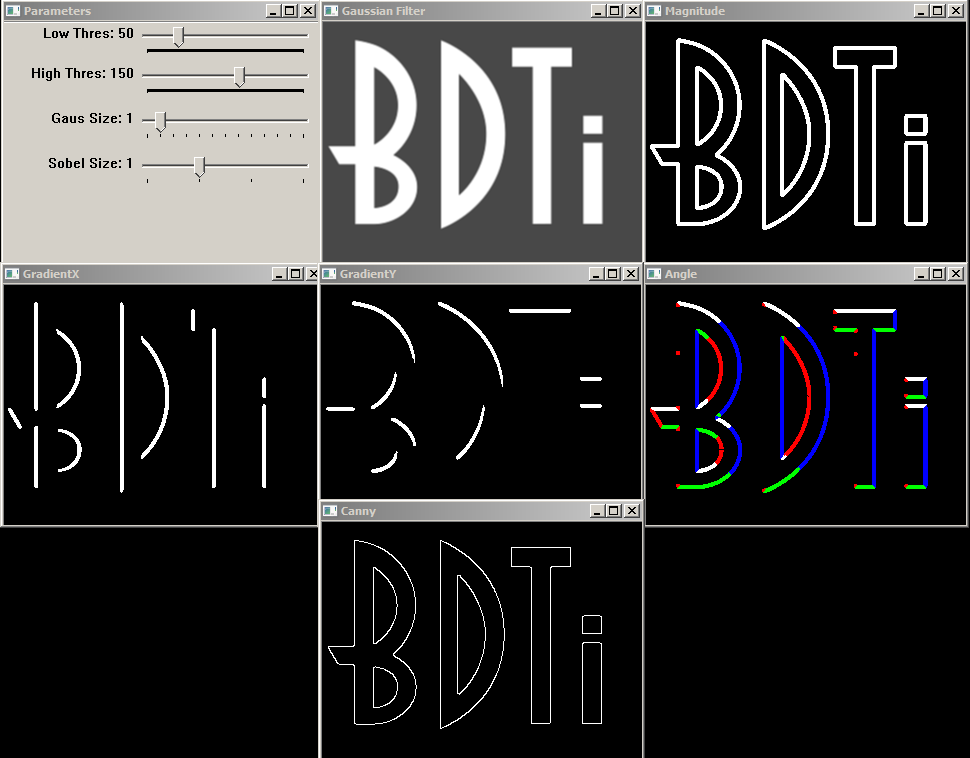
May 13, 2013 Eric Gregori, senior software engineer and embedded vision specialist at BDTI, presents the "Finding Objects Using Canny Edge Detection" tutorial within the "Using Vision Algorithms" technical session at the April 2013 Embedded Vision Summit. This presentation dives into the Canny edge detection algorithm; how it works and how to use it. Topics include a Canny algorithm walk through, connecting edges with contours, and classifying contours with mathematical models. Finally, the topics learned are applied to describe a system for counting dots on dice. |
![]() |
|
|
May 01, 2013 By Eric Gregori |
![]() |
|
|
April 16, 2013 By Brian Dipert Yair Siegel Simon Morris Liat Rostock Gershom Kutliroff |
![]() |
|
|
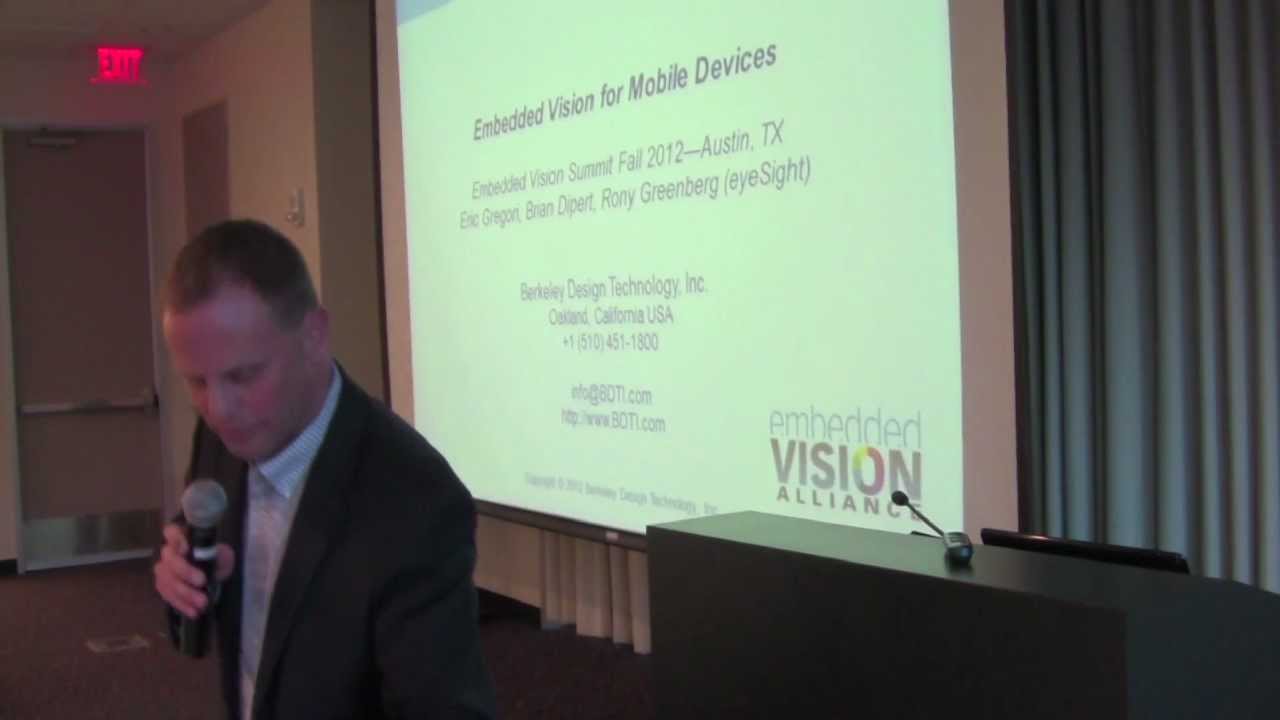
January 04, 2013 Embedded Vision Alliance Editor-in-Chief (and BDTI Senior Analyst) Brian Dipert and BDTI Senior Software Engineer Eric Gregori co-deliver an embedded vision application technology trends presentation at the December 2012 Embedded Vision Alliance Member Summit. Brian and Eric discuss embedded vision opportunities in mobile electronics devices. They quantify the market sizes and trends for smartphones and tablets, along with detailing the robust hardware, operating systems and development tools available. |
![]() |
|
|
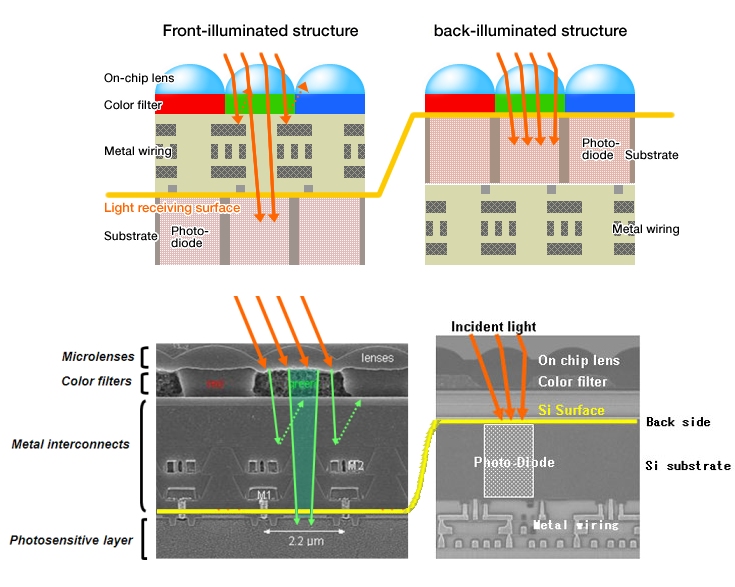
October 30, 2012 Eric Gregori, senior software engineer and embedded vision specialist at BDTI, presents the "Image Sensor Options and Trends for Embedded Vision" tutorial at the September 2012 Embedded Vision Summit. Topics discussed by Gregori in his presentation include the differences between CCDs and CMOS 2D sensors, the three primary types of 3D sensors (stereo, structured light, and time-of-flight), and application examples that highlight when you might want to use either a 2D or 3D sensor. |
![]() |
|
|
September 11, 2012 By Brian Dipert |
![]() |
|
|
August 14, 2012 OpenCL is an emerging SDK (software development kit) that targets the problem of developing on heterogeneous multi-core platforms. Previously confined purely to the world of GPGPU (general-purpose computing on graphics processor units), it has recently also achieved acceptance on other hardware platforms, including fixed-function accelerators and even FPGAs. |
![]() |
|
|
August 08, 2012 By Eric Gregori |
![]() |
|
|
August 03, 2012 By Eric Gregori |
![]() |
|
|
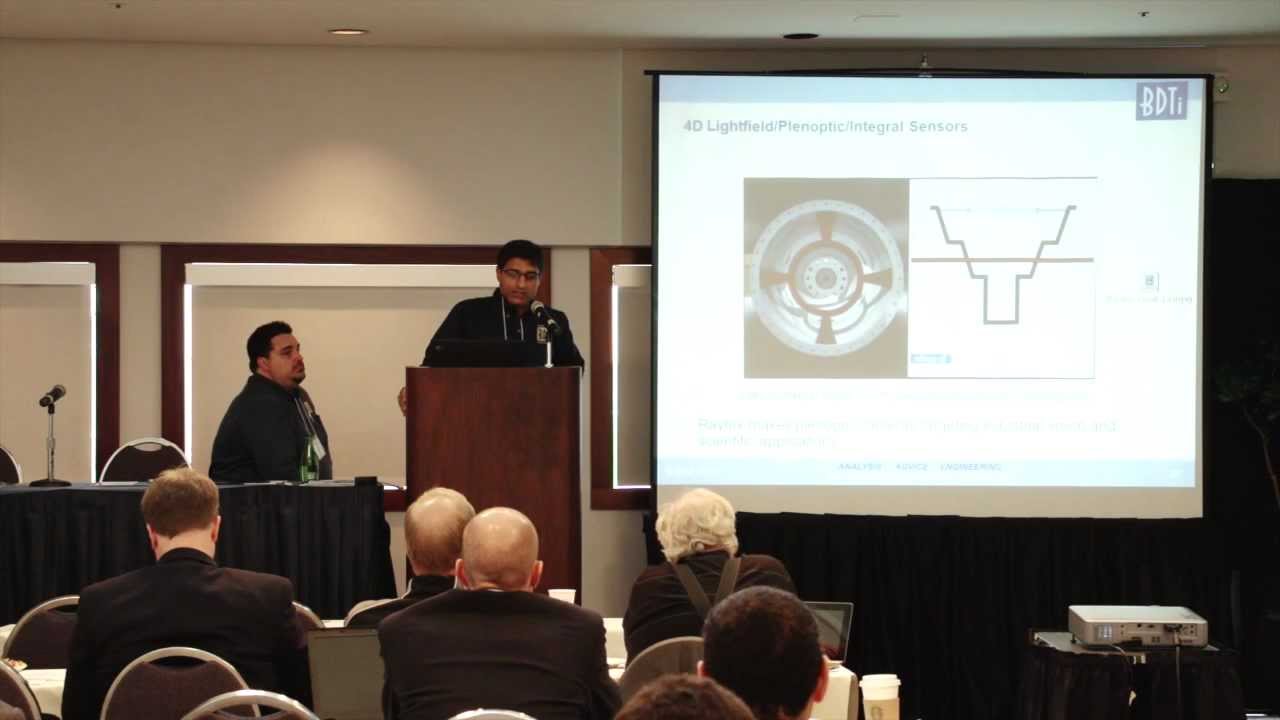
May 17, 2012 BDTI Senior Engineers Eric Gregori and Shehrzad Qureshi deliver a techology trends presentation on image sensors for embedded vision applications, at the late-March 2012 Embedded Vision Alliance Summit. Eric and Shehrzad discuss trends regarding conventional 2-D image sensors, as well as those supporting "3-D" (depth discernment) and "4-D" (i.e. selective focus, otherwise known as light field or plenoptic) functions. |
![]() |
- 3843 reads